
Poultry Farm Incinerators for Mortality Disposal & Biosecurity
On-site, immediate destruction of daily poultry mortality and biosecurity waste — protecting your flock, your operation, and your biosecurity certification from disease transmission and regulatory exposure.
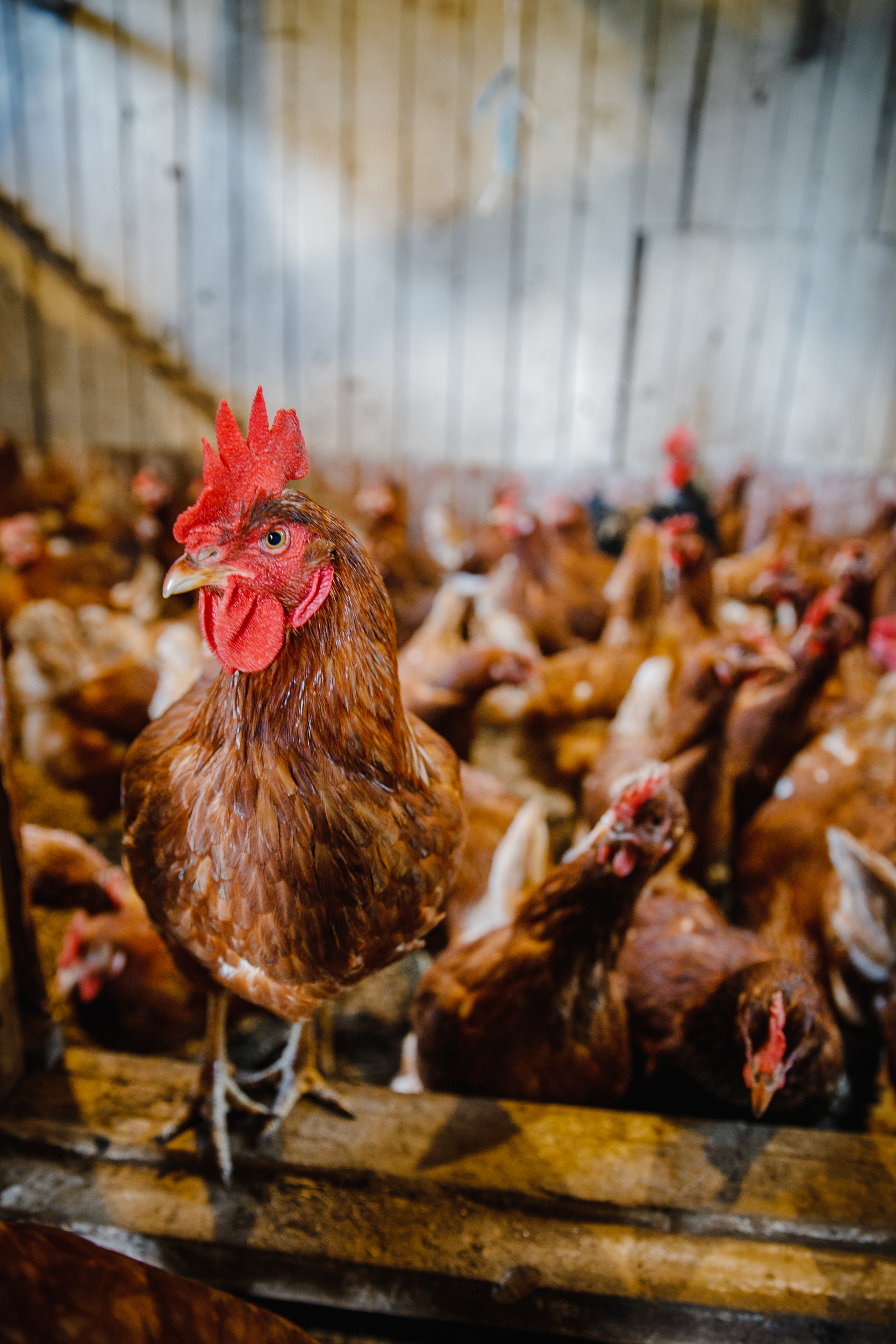
Purpose-Built Mortality Disposal for Poultry Operations
Poultry farming is a high-volume, margin-sensitive business where mortality disposal is a daily operational task, not a periodic inconvenience. Every broiler house, layer barn, and turkey operation in the Southeast generates mortality every single day — birds that must be collected, documented, and disposed of quickly to maintain biosecurity, satisfy integrator compliance requirements, and prevent disease spread within your flock.
Eco Concept, Inc. manufactures industrial-grade incinerators purpose-built for the specific demands of poultry mortality disposal. Farm operators across Georgia, Alabama, North Carolina, South Carolina, and Tennessee use Eco Concept units to eliminate daily mortality on-site — same day, on their property, with no rendering dependency and no biosecurity gaps created by carcass accumulation or transport.
In an industry where avian influenza response time can determine whether a single-farm outbreak becomes a multi-farm emergency, having on-site high-temperature destruction capability is not a convenience — it is a biosecurity investment that protects your flock, your neighbors' flocks, and your farm's standing with your integrator.
The Poultry Mortality Disposal Challenge
Poultry operations in the Southeast face mortality disposal demands unlike any other livestock sector — high daily volumes, biosecurity-critical timelines, integrator compliance requirements, and the ever-present threat of avian disease outbreaks.
High Daily Mortality Volume
Even a healthy commercial broiler or layer operation experiences daily mortality. Across a multi-house operation with 100,000+ birds, daily losses accumulate quickly. Without on-site disposal capability, carcasses must be stored — creating biosecurity exposure, odor issues, pest attraction, and integrator compliance risk while waiting for rendering pickup.
Avian Influenza Biosecurity Risk
Highly Pathogenic Avian Influenza (HPAI) remains an active biosecurity threat across the Southeast. During an outbreak event, immediate on-site destruction of affected birds is the biosecurity standard — not rendering transport, which risks spreading the virus across routes and to other farms. USDA APHIS depopulation and disposal guidelines prioritize on-site incineration for HPAI response.
Integrator & State Compliance Requirements
Poultry integrators across the Southeast — including major broiler producers operating in Georgia, Alabama, and the Carolinas — set explicit mortality disposal standards for contract growers. State agriculture departments in Georgia, Alabama, North Carolina, South Carolina, and Tennessee each maintain regulations governing on-farm mortality disposal. Rendering-dependent operations face compliance risk when pickup schedules don't align with integrator timelines.
Rendering Costs & Availability
Rendering service availability in rural Southeast poultry country is increasingly limited and expensive. Per-bird or per-pound rendering fees accumulate into significant annual costs for large operations. Rendering trucks arrive on their schedule — not yours — creating bottlenecks when mortality spikes during hot weather, disease events, or peak production periods.
On-Site Poultry Mortality Incineration: Daily Disposal, Maximum Biosecurity
An Eco Concept poultry incinerator gives your operation the ability to destroy mortality the same day it occurs — eliminating accumulation, protecting biosecurity, and maintaining integrator compliance without rendering dependency.
Same-Day Mortality Disposal
Collect dead birds, load the incinerator, and destroy the same day. No accumulation in mortality pits or freezers awaiting rendering pickup. No biosecurity gaps created by on-site carcass storage. Complete destruction every day keeps your biosecurity posture current with your integrator's standards and state agriculture requirements.
Avian Influenza Response Capability
When HPAI or Newcastle Disease strikes, immediate on-site incineration is the USDA-recommended destruction method for affected birds. An Eco Concept incinerator on your property gives you the capability to respond within hours — not days — eliminating the spread risk created by transport or delayed disposal waiting for regulatory contractor arrival.
Complete Pathogen Elimination
Combustion at temperatures exceeding 1,400°F destroys avian influenza virus, Newcastle Disease virus, Marek's Disease, Salmonella, and all other poultry pathogens present in mortality. No viable pathogen survives complete incineration — unlike burial, composting, or rendering transport, which carry transmission risk at each handling point.
Integrator Compliance Documentation
Generate disposal records for every mortality event — date, quantity, disposal method — keeping your operation current with integrator biosecurity requirements and state agriculture disposal regulations. Documentation is generated on-site, under your control, and immediately available for integrator or state inspector review.
Elimination of Rendering Contract Dependency
Replace rendering contracts with a one-time capital investment. Large broiler and layer operations that run rendering costs of $10,000–$30,000+ annually often achieve full payback on an Eco Concept incinerator within 3–5 years — with decades of ongoing cost control beyond that.
Recommended Incinerator Models for Poultry Operations
Eco Concept offers models matched to the mortality volumes and flock sizes typical of Southeast USA poultry operations — from small independent growers to large commercial integrator farms.
The ECO 750 is designed for poultry operations managing routine daily mortality disposal with moderate volumes per event. It is well suited for independent growers with 1–3 poultry houses, smaller layer operations, turkey farms with moderate flock sizes, and operations that manage routine daily disposal without peak high-volume event demands. Its compact footprint integrates into standard farm infrastructure.
- Handles routine daily poultry mortality disposal
- Suitable for 1–3 house broiler or layer operations
- Compact footprint for farm lot installation
- Simple operation manageable by farm staff
The ECO 1000 is the standard choice for large commercial poultry operations — integrator contract farms with 4+ houses, large-scale layer operations, and any farm that needs high-volume disposal capability for HPAI or other disease outbreak response. It handles the higher mortality volumes that large broiler and layer flocks generate, and provides the throughput capacity required for rapid mass-disposal during biosecurity emergencies.
- High-throughput design for large commercial flock mortality
- Critical HPAI biosecurity response capability
- Handles multi-house daily mortality consolidation
- Sustained operation during extended disposal events
Why Eco Concept
Manufacturer Direct
Eco Concept builds every incinerator in-house. Poultry growers work directly with the manufacturer — no dealers, no markups, and full engineering support for your specific operation.
Engineered for Poultry Operations
Our agricultural incinerators are designed for the high-frequency, daily-use demands of poultry mortality disposal — built to handle consistent loading cycles in the outdoor Southeast farm environment.
Eliminates Rendering Dependency
Replace rendering contracts with a capital asset that pays for itself over time. Large poultry operations spending $15,000–$30,000 annually on rendering contracts often achieve payback within 3–5 years.
Biosecurity Performance Under Pressure
During HPAI events or other biosecurity emergencies, your incinerator is the response asset your farm depends on. Eco Concept units are built for reliability when you need them most — not just routine operations.
Deep Southeast Poultry Market Knowledge
Georgia and Alabama are among the top broiler-producing states in the nation. North Carolina ranks as a leading poultry state. Eco Concept understands the integrator relationships, state regulatory requirements, and operational realities of Southeast poultry farming.
Daily Disposal Reliability
Poultry mortality disposal is a daily task — which means your incinerator must perform reliably every single day. Eco Concept's industrial construction and burner systems are built for continuous daily use in agricultural environments.
Poultry Farm Incinerators Nationwide — All 50 States & International
Eco Concept supplies poultry incinerators to farm operations across all 50 states. While our roots are in the Southeast poultry belt — the top broiler-producing corridor running through Georgia, Alabama, North Carolina, and Tennessee — poultry production exists in every region of the country. From the Delmarva Peninsula in the Mid-Atlantic to the Pacific Northwest, from the Great Plains to the Gulf Coast, every commercial poultry operation faces the same daily mortality disposal challenge.
Eco Concept works with poultry growers, farm managers, and integrators in every state to provide equipment that meets their disposal needs and complies with applicable state agriculture department and environmental regulations. We supply technical documentation to support permitting discussions regardless of which state agency governs your operation, and we ship and install nationwide.
Whether you operate in Georgia, Iowa, Arkansas, Washington, or anywhere in between — or need equipment for an international poultry operation — Eco Concept has the model and the experience to support your operation. We also supply incinerators to international poultry operations in Latin America, the Caribbean, Europe, and beyond.
States & Regions We Serve
Frequently Asked Questions
Yes. USDA APHIS guidance for Highly Pathogenic Avian Influenza (HPAI) response prioritizes rapid on-site disposal to prevent virus spread. Incineration is among the recommended destruction methods — eliminating virus through complete combustion without the transport risk that rendering or off-site disposal creates. During an HPAI response event, having an Eco Concept incinerator on your property means your farm can begin virus elimination immediately upon USDA authorization, rather than waiting for contractor availability or transport logistics coordination.
Capacity depends on model and bird size. During consultation, we review your daily average mortality, worst-case mortality volumes during disease events or extreme weather, and the size and weight of birds at various production stages. Based on this information, we recommend the ECO 750 or ECO 1000 and discuss operational cycles that meet your daily disposal needs. For large commercial operations with high daily volumes or outbreak response requirements, the ECO 1000 provides the throughput necessary for sustained high-volume disposal.
Most major poultry integrators operating in the Southeast recognize and often prefer on-site incineration as a biosecure disposal method. Integrator biosecurity standards typically require documented daily mortality disposal — a standard that on-site incineration satisfies with same-day destruction and disposal records. We recommend confirming your specific integrator's disposal documentation requirements during your equipment evaluation, and we can provide technical documentation to support those discussions.
Permit requirements vary by state. Most Southeast states have agricultural exemptions or simplified registration processes for on-farm poultry mortality incinerators below certain capacity thresholds. Georgia, Alabama, North Carolina, South Carolina, and Tennessee each have state agriculture department and environmental agency guidelines for on-farm mortality disposal equipment. Eco Concept provides technical documentation to support your permitting discussions with state authorities. We recommend contacting your state agriculture department before installation to understand applicable requirements.
Incineration provides biosecurity performance that composting cannot match. Complete combustion eliminates all pathogens immediately — composting requires weeks or months of managed decomposition and does not guarantee pathogen elimination, particularly for HPAI or other highly contagious avian diseases. Incineration also eliminates the land space requirements, moisture management, and material management that composting demands. During disease outbreak events, incineration is the only method that satisfies USDA rapid-disposal requirements. For operations with biosecurity certification requirements, on-site incineration provides a stronger, more documentable compliance posture than composting.
Ready to Solve Your Farm's Daily Mortality Disposal Challenge?
Eco Concept is ready to help your poultry operation find the right on-site incinerator — one that handles your daily mortality volume, protects your biosecurity certification, and eliminates rendering dependency for good.
Or return to our Agricultural Incinerators page to explore other farm type solutions.
